


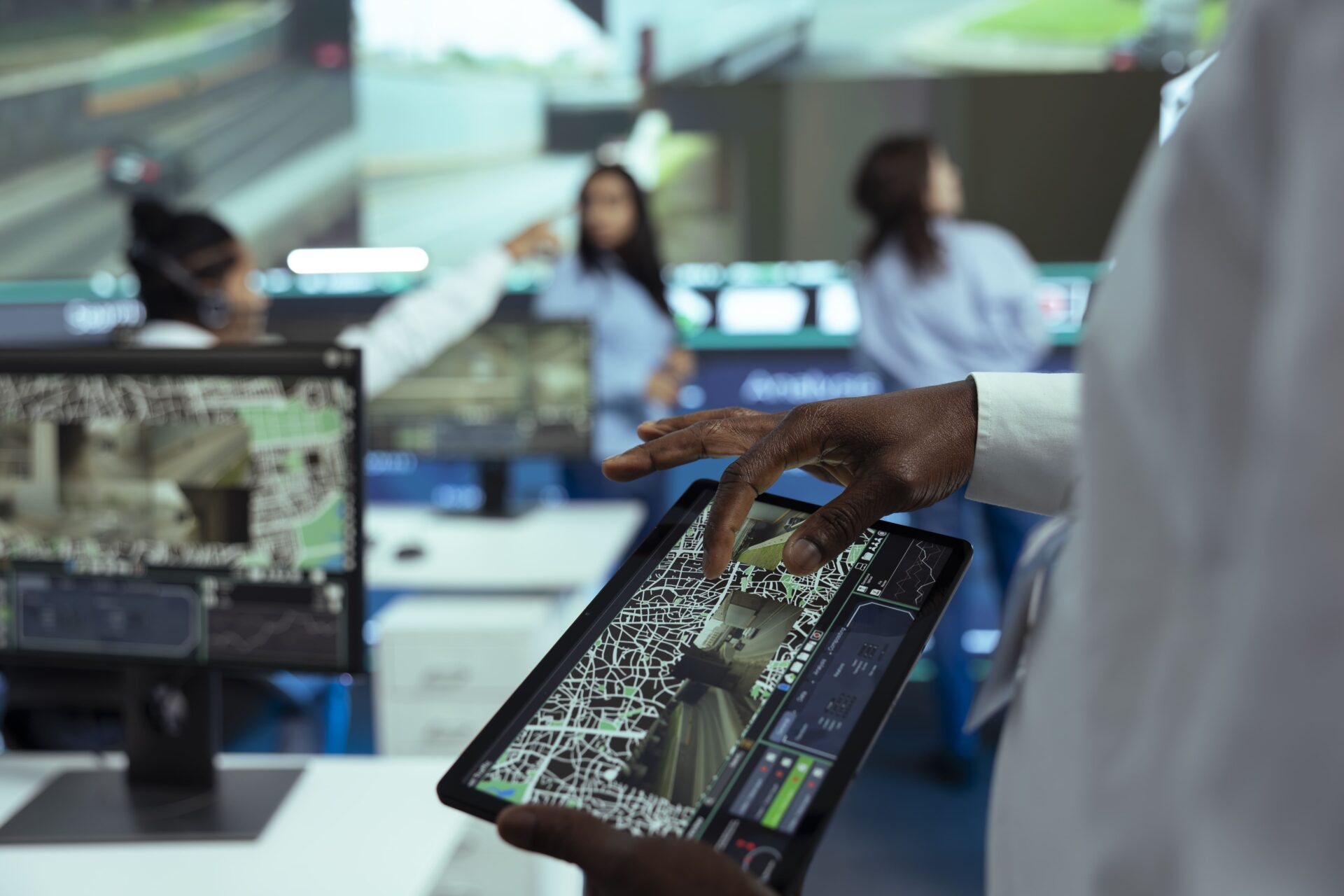
Cities are dynamic. Traffic patterns shift by the minute, weather disrupts operations without warning, and passenger demand fluctuates in ways that static schedules can’t predict. Traditional transit systems, which depend on centralized servers or slow manual processes, often struggle to keep up with this pace of change. The answer is transit edge computing—a new paradigm that processes data directly where it’s collected, turning bus stops, vehicles, and intersections into intelligent, responsive hubs.
What Is Transit Edge Computing?
Edge computing is the practice of moving data processing closer to the source. Instead of sending raw information back to a distant data center or cloud platform, analysis happens locally, “at the edge” of the network. In transit, this means sensors, cameras, and digital signage at bus stops or onboard vehicles can analyze information instantly and act on it in real time.
A bus stop equipped with edge computing, for example, doesn’t just display a timetable—it continuously calculates arrival times based on live GPS data, traffic conditions, and historical patterns. If connectivity is disrupted, the stop can still provide accurate information because the processing happens locally.
Why It Matters
Transit is uniquely sensitive to time. Delays of even a few minutes can ripple across an entire network, frustrating passengers and undermining trust. Relying on distant servers to process data introduces latency—gaps that make real-time communication unreliable.
Transit edge computing eliminates that delay. Updates are delivered instantly, ensuring riders receive accurate information when they need it. For agencies, edge systems provide resilience, ensuring that critical operations continue even during connectivity failures or power outages.
Edge computing also reduces bandwidth demands. Instead of transmitting vast amounts of raw data, local systems filter and analyze information, sending only the most relevant insights upstream. This makes networks more efficient and cost-effective.
The Human Experience
For passengers, the benefits of edge computing show up in everyday moments. The bus stop screen that remains accurate during a power disruption. The dynamic display that updates instantly when traffic slows a vehicle. The audio announcement that guides a visually impaired rider confidently to their destination.
These details matter. They turn transit from a system of uncertainty into one of reliability. Riders feel respected when information is both accurate and resilient, and that trust translates into increased ridership and reduced reliance on private cars.
Transit Edge Computing in the Smart City
Transit edge computing doesn’t operate in isolation—it is part of the broader smart city ecosystem. Local processing at bus stops feeds into larger networks, enhancing traffic management, safety, and environmental monitoring. For example, an edge-enabled stop can measure air quality and feed that data into the city’s sustainability dashboard. Or a bus equipped with edge systems can communicate directly with traffic lights, requesting priority through congested intersections.
By distributing intelligence across the network, cities reduce single points of failure and gain flexibility. Edge computing ensures that the city is not only smarter but also more resilient.
The BusPas Approach
At BusPas, transit edge computing is the heart of our ORA platform. We embed AI-powered processors directly into our smart bus stops, ensuring that passengers receive real-time updates even when connectivity is limited. Our e-paper displays continue to function during outages, preserving the last frame of information so riders are never left in the dark.
By processing data locally, we deliver accurate, fast updates to passengers while simultaneously providing agencies with actionable insights on ridership, boarding times, and demand. This approach reduces costs, improves efficiency, and strengthens resilience.
We design our systems to be modular and scalable, so cities of any size—from major metropolitan regions to smaller municipalities in Québec—can adopt edge computing without massive infrastructure overhauls. This democratizes innovation, ensuring that smart, resilient transit is available to everyone.
Looking Ahead
The future of mobility will depend on systems that are not only intelligent but also responsive. Transit edge computing provides the foundation for this future by ensuring that intelligence lives where it’s needed most—at the street corner, in the vehicle, and across the network.
For riders, it means confidence in every journey. For agencies, it means resilience in the face of disruptions. For cities, it means infrastructure that adapts dynamically to the challenges of climate change, congestion, and growth.
At BusPas, we are proud to be proving that the edge is not the future—it is the present. By embedding computing power directly into bus stops and transit infrastructure, we are showing that reliability begins where people wait. The smallest node of the network becomes the smartest, and together, they create transit systems that are more sustainable, more equitable, and more human.

BusPas Inc.
Com este projeto, a cidade não se contenta em modernizar o seu sistema de transportes públicos, mas define o padrão do que é possível para a próxima geração de mobilidade urbana.

